





How to Choose a Sustainable Vegan Wallet
Choosing a wallet used to be simple. Today, if you'd rather not carry animal leather, you're met with a wall of terms — apple leather, cactus leather, cork, recycled PU, "bio-based," "plant-based" — and very little to tell you which actually holds up, and which is sustainable marketing rather than substance.
This guide cuts through that. It explains what makes a wallet genuinely vegan and sustainable, what the leading materials are really made from, how durable they are, and what to look for before you buy.
What does "vegan" and "sustainable" actually mean for a wallet?
The two words are related but not the same, and the difference matters.
Vegan means the wallet contains no animal-derived materials — no leather, suede or animal-based glues. A wallet can be fully vegan and still be made from cheap, petroleum-based plastic.
Sustainable goes further. It asks where the material comes from, how it's made, how long it will last, and what happens at the end of its life. A genuinely sustainable wallet tends to combine low-impact or upcycled materials, recycled linings, ethical manufacturing, and the kind of build quality that means you won't replace it in a year.
The takeaway: vegan is the floor, not the ceiling. The most considered wallets are both.
What are vegan wallets made from?
"Vegan leather" is an umbrella term covering very different materials. Some are next-generation bio-based leathers made from agricultural waste; others are recycled plastics; a few are conventional synthetics. Here's how the main options compare.
| Material | Made from | Strengths | Worth knowing |
|---|---|---|---|
| Apple Leather | Upcycled apple waste from the fruit-juice industry (largely Bolzano, Italy) | Premium, smooth feel; durable; OEKO-TEX certified; turns waste into a usable material | Roughly half polymer, so it isn't fully plastic-free |
| WASTEA® | Upcycled tea waste | Supple, hard-wearing; 65% bio-content; naturally dried, avoiding an energy-intensive step; OEKO-TEX certified; supports tea farmers | Bio-PU coated onto a recycled polyester canvas |
| Cork | Bark of the cork oak (harvested without felling the tree) | Lightweight, water-resistant, naturally renewable and biodegradable | Distinctive texture; less "leather-like" in look |
| Cactus (Desserto) | Nopal cactus leaves | Soft, durable, drought-tolerant crop | Partly bio-based; blended with a binder |
| Piñatex | Pineapple leaf fibre, a farming byproduct | Natural origin; lightweight | Thinner; usually coated for durability |
| Recycled PU / nylon | Post-consumer recycled plastics | Durable, water-resistant, affordable | Petroleum-derived, though diverting existing plastic |
| MIRUM® | 100% natural inputs | Completely plastic-free; the most circular option | Newer to market; premium |
A useful rule of thumb: most modern bio-based leathers pair a natural, upcycled input with a polymer binder to give it strength and a leather-like finish. That's a far lower impact than animal leather or virgin plastic — but if fully plastic-free matters most to you, look specifically for a material like MIRUM®.
Are vegan wallets durable?
Yes — today's bio-based leathers are engineered for daily wear, and a well-made one will last for years. Durability comes down to three things more than the material name itself:
- Construction. Painted and sealed edges, a reinforced spine and quality stitching are what stop a wallet wearing out at the folds.
- Lining. A good inner lining (recycled microfibre suede or recycled polyester) resists abrasion from cards and coins.
- Care. Like any material, vegan leather lasts longer when it isn't overfilled and is wiped clean occasionally.
A two-year warranty is a strong signal a brand stands behind its build quality.
What's the most sustainable wallet material?
There's no single winner — it depends on what you weigh most heavily:
- Lowest end-of-life impact: a fully plastic-free material such as MIRUM®.
- Best waste-reduction story: upcycled materials like apple leather or WASTEA®, which turn an existing byproduct into something useful.
- Most renewable raw material: cork, harvested without harming the tree.
What unites the best choices is transparency — a brand that tells you exactly what its material is, where it comes from, and how it's made.
How to choose: a quick checklist
Before you buy, run through these:
- Material transparency. Can you find out exactly what it's made from and where? Vague "eco leather" claims are a red flag.
- Certifications. Look for OEKO-TEX (free from harmful chemicals), GRS (Global Recycled Standard) on linings, and B Corp status for the brand overall.
- Build quality. Painted edges, a reinforced spine, neat stitching and a proper lining.
- Function. RFID protection, the right card capacity, and a slim profile that won't bulk out in your pocket.
- Longevity. A warranty and a design built to outlast trends, not a throwaway price.
How to care for a vegan wallet
A few simple habits keep a bio-based leather wallet looking its best:
- Wipe clean with a soft, slightly damp cloth; avoid harsh cleaners.
- Don't overfill the pockets — one card per slot helps the material keep its shape.
- Store away from direct sunlight and heat, which can fade or warp any material.
- If it gets wet, let it air-dry naturally rather than using direct heat.
The Oliver Co approach
At Oliver Co we set out to prove that a lower environmental impact shouldn't mean a lower-quality product — sustainability without compromise.
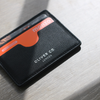
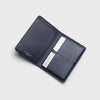
Our wallets are crafted from premium bio-based leathers, including Apple Leather and WASTEA®, a bio-PU material made from upcycled tea waste and co-developed exclusively for us. They're lined with recycled microfibre suede and recycled polyester, finished with hand-painted edges and a reinforced spine, and carry RFID protection and a two-year warranty.
Designed in London and ethically handcrafted in Istanbul, our products are made by a single trusted factory partner. As a certified B Corp — awarded 'Best for the World' for the environment in 2022 — we hold ourselves to measurable standards on impact, not just intentions. It's an approach that's seen our wallets named 'Best Wallet' by the Independent's IndyBest and recognised at the Global Vegan Awards.
Explore the full collection of sustainable vegan wallets →
Frequently asked questions
Are vegan wallets durable? Yes. Modern bio-based leathers are engineered for everyday wear, and a well-constructed wallet will last for years — especially one with sealed edges, a quality lining and a warranty.
Is apple leather plastic-free? Not entirely. Apple leather upcycles real apple waste but is roughly half polymer, which gives it strength and a leather-like finish — and WASTEA® likewise pairs upcycled tea waste with a bio-PU binder. Both cut impact dramatically versus animal leather or virgin plastic, but for a fully plastic-free option, look for a material such as MIRUM®.
Do vegan wallets last as long as leather ones? A high-quality bio-based leather wallet is comparable to a good animal-leather wallet in lifespan. Construction and care make more difference than the material category alone.
Is vegan leather waterproof? Most bio-based leathers are water-resistant rather than fully waterproof. Wipe spills promptly and let the material air-dry if it gets wet.
What makes a wallet sustainable rather than just vegan? Sustainability considers the whole picture: low-impact or upcycled materials, recycled linings, ethical manufacturing, durability and credible certifications — not simply the absence of animal products.
Still have questions? Our Vegan Wallet FAQs cover materials, durability, features and care in more detail.
0 comments